
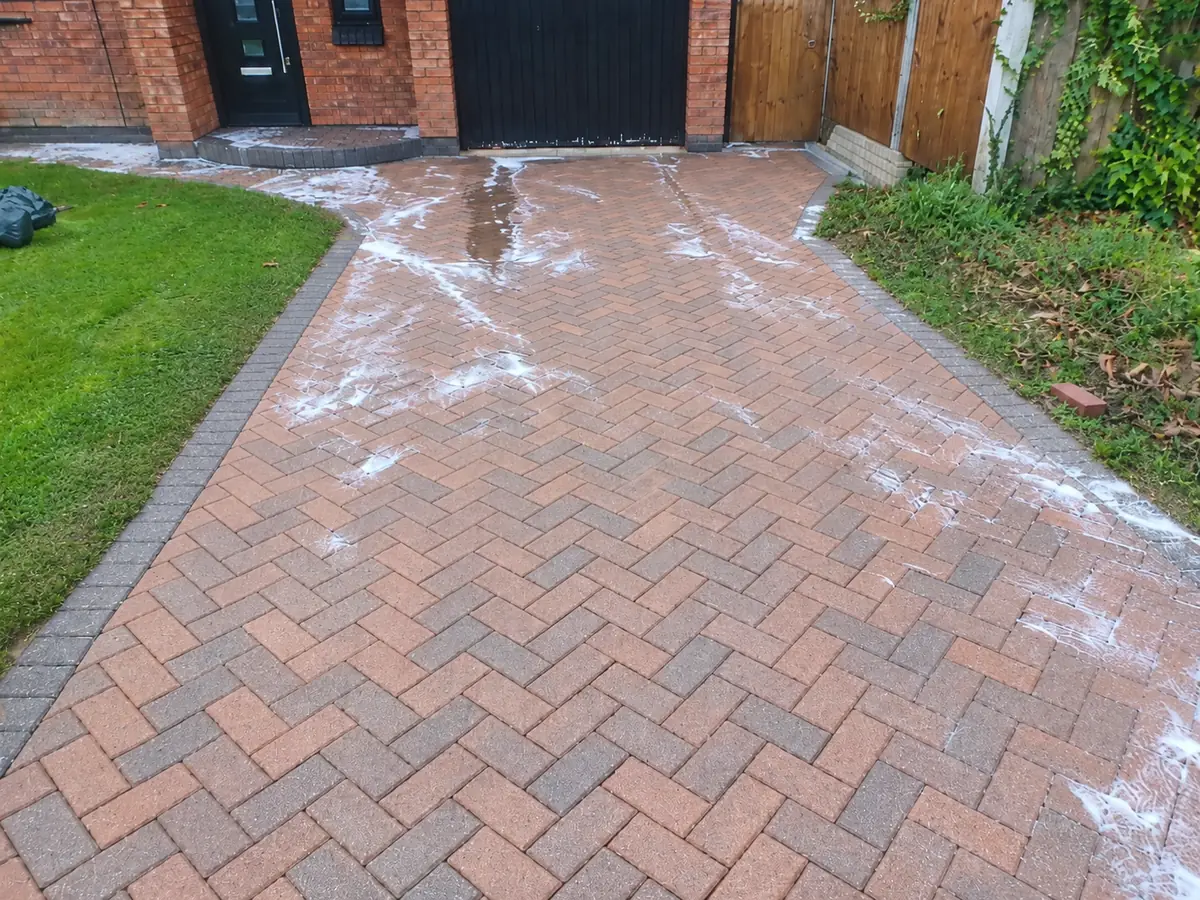
Granite driveway cleaning is a different job to anything else on my round. It doesn’t come up as often as sandstone round Liverpool. When it does, it’s usually a driveway laid in setts rather than big slabs. The stone itself is close to bulletproof. The gaps between it are another story. So here’s what I’ve learned from cleaning it.
In this post
What is granite paving?
Granite is an igneous rock formed from cooled magma. That makes it about as hard and dense as paving gets. You’ll usually see it as small rectangular setts in grey or silver grey, and now and then in darker charcoal. People often call them cobbles. That density is exactly why it’s such a different clean to the rest.
Are granite setts harder to clean than slabs?
Yes, a bit. Most granite driveways I see are laid as setts, a bit like traditional cobblestones. Setts mean far more joint lines than a slabbed drive. More joints means more places for moss and weeds to get a foothold. Granite slabs are much more straightforward and clean up like any flat paving.
Why doesn’t granite stain like other stone?
Because water can’t get into it. Granite is about as low porosity as natural stone gets, so rain sits on the surface instead of soaking in. Algae and moss struggle to get going on the stone itself. I’ve cleaned granite driveways five or six years old that still looked decent under the surface dirt. There was no green creeping into the stone the way you’d see on sandstone by that age.
Why does my granite driveway still look dirty?
It’s the joints and the surface grime. Moss and weeds love the gaps between setts, especially if they weren’t jointed properly when laid. Tyre marks and everyday dirt build up on top too. It’s all surface level rather than soaked in, which is good news. It means it comes off.
A dull grey look isn’t always dirt either. Sometimes it’s just light weathering, and a clean brings the shine straight back.
How do you clean a granite driveway?
With confidence, because it can take it. Granite is so hard that I don’t have to worry about damaging the face, and I can’t say that about every stone. The pressure washer lifts the general grime first. Then the twin jet surface cleaner goes over the setts for an even finish. Where moss has got into the joints, the Turbo Nozzle clears it out properly. It blasts through the roots rather than knocking the top growth off.
Heads up: if the joints are badly overgrown, I might need two passes. One to clear the bulk and another once it’s dried a bit to catch what’s left. Better you know now than get surprised on the day.
The weeds tend to come back where the joints are open, so I treat the gaps as well as cleaning them. It’s a similar story to porcelain paving. Both are dense enough to take a proper clean without much risk. If your drive’s weed problem is the main thing bothering you, have a read of my Southport weeds case study. You’ll find more granite jobs on my Facebook page.
Does a granite driveway need sealing?
Honestly, not really, and I wouldn’t take your money for it. Granite already resists water and staining so well that a sealer adds very little. The stone is already doing the job a sealer would do on something like sandstone. I’d tell you to save it.
That’s the opposite of what I’d say about limestone, where a seal does real work. I clean granite drives right across Liverpool, and out to Formby and Heswall, so if yours needs a hand, see my driveway cleaning service.
FAQs
Driveway cleaning starts from £100. Granite usually sits on the friendlier side because the stone itself cleans up so easily. What pushes a price up is the size of the drive and how overgrown the joints are. Setts with moss and weeds packed into every gap take longer than a clean slabbed drive. The easiest way to find out is to send me a few photos on WhatsApp to 07469 539 068. You get 10% off for quoting that way because it saves me the fuel of driving out. I normally reply within about five minutes. Or ring me on 0151 272 3404 if you’d rather chat.
A couple of wide photos from the pavement and the front door, so I can see the size and shape. Then a few close ups of the joints, because that’s where most of the work is on granite. If weeds are growing in the gaps, get a shot of the worst patch. A short video walking up the drive is just as good. I’ll come back to you with a price, usually within about five minutes. I’ll also tell you honestly if I think the joints will need a second pass. That way the price you get is the price you pay, with no surprises on the day.
Granite itself is quick to clean because nothing has soaked into it. The joints are what decide how long I’m there. A drive with tidy, well filled joints goes fast. One where moss and weeds have taken over every gap takes longer, because I clear each joint properly with the Turbo Nozzle. If it’s badly overgrown, I may need a second pass once it’s dried a little. I’ll tell you if that’s likely when I see your photos. Either way I’ll give you a rough idea of time up front so you can plan round it and move the car out of the way.
Most granite comes up really well. The stone hasn’t absorbed the dirt, so once the grime and tyre marks are lifted the natural colour and sparkle show through again. A lot of people think their drive has faded when it’s just dull with surface muck. Clean granite also looks darker and richer while it’s still wet, so judge it once it’s dried. The joints will look far tidier too once the moss is out. What a clean can’t fix is setts that are cracked, chipped or loose. Those need a paving contractor rather than a cleaner, and I’ll tell you honestly if I spot any.
It’s very unlikely to harm the granite itself because it’s one of the hardest stones I deal with. The setts come loose from what’s around and under them, not the stone. If the base or the jointing wasn’t done properly when it was laid, setts can move over time whatever you do. A careless jet aimed straight down a weak joint can make that worse. I keep the Turbo Nozzle moving and treat loose areas gently. If I notice movement while I’m working, I’ll tell you. It’s a laying issue rather than a cleaning one, so it’s worth raising with whoever put the drive in.
Because the joints give them somewhere to live. Seeds blow in, settle in the dirt between the setts and root down. The granite itself won’t grow anything, but every gap is a little planter. Pulling the tops off just gives them a trim. The roots need clearing out, which is what the Turbo Nozzle does. Treating the joints after the clean slows the next lot down. If the jointing is open or missing, they’ll find their way back faster. You can help by sweeping regularly so dirt and seeds don’t settle in the gaps. A quick brush once a week makes a real difference to how long it stays tidy.
Rarely on the stone itself. If you can see green on a granite drive, it’s almost always in the joints or on a film of dirt sat on top. Granite doesn’t soak up water, so algae can’t get into it the way it does with sandstone or limestone. Very shaded spots under trees can still get a thin green layer over the surface dirt. It washes off easily. That’s one of the reasons I rarely need to clean granite as often as other stone. If it’s going green fast, it’s usually a sign of water pooling or overflowing gutters dripping onto the same spot.
Less often than most. Every 18 months to 2 years is typical because the stone resists staining so well. The real deciding factor is the joints. If weeds and moss are getting a grip in the gaps, that’s when it’s time. Drives under trees or next to overgrown hedges will need it sooner. A sweep every week or two keeps dirt and seeds out of the joints and stretches the time between cleans. My post on how often to jet wash a driveway covers the general signs that a drive is due. I won’t push you to book sooner than you need to.
Yes, I’ll need the drive clear so I can get to every sett and every joint. Cars sat on the drive also tend to hide the worst oil and tyre marks, so it’s worth moving them anyway. Park on the road or round the corner and I’ll do the rest. I run 50 metre hoses from the van, so I don’t need the van on your drive either. I’ll need an outside tap or another water source. You don’t have to be in while I work. Just let me know the car will be moved and the tap is free, and I’ll get on with it.
Yes, rain doesn’t really stop a granite clean. The stone doesn’t soak anything up, so I can wash it down in wet weather and get a good result. Heavy rain can make it harder to see what’s left in the joints, so I might go over those again once it eases. The one thing I won’t do is clean in a hard frost. Water left on the surface can freeze and turn the drive into an ice rink. I’ll keep an eye on the forecast for your day. If it looks wrong, I’ll tell you and move it rather than do a rushed job.
Granite looking tired in the joints?
Send me some photos on WhatsApp and I’ll get you a price, usually within about five minutes. You get 10% off for quoting that way instead of waiting for a site visit.
See my latest jobs on Facebook, read what customers say on Google, or watch the work on YouTube.