
Moss on roof tiles is so common round here that most people stop noticing it. A bit of green on the north side isn’t the end of the world. Once it gets thick, though, it starts causing problems that cost far more to fix than it does to keep on top of. Here’s how to tell when moss on your roof matters and what I’d do about it.
In this post
Why does moss grow on roofs?
Shade and damp. Liverpool gives it plenty of both. North facing slopes and roofs under trees are always the worst because the tiles never fully dry out. Concrete tiles have a rough face that moss grips easily. Once it’s settled in it holds water like a sponge. That keeps the tiles wet and helps it spread even faster.
You’ll often see one side of a roof bright green and the other side almost clean. That’s the sun doing its job on the south side and not getting a look in on the north.
When is moss on a roof actually a problem?
When it’s thick. Thin patches aren’t much to worry about. Thick cushions of moss are a different story. They hold water against the tiles, and in a frost that water freezes and can crack them. Moss can also lift tiles at the edges and let rain get underneath.
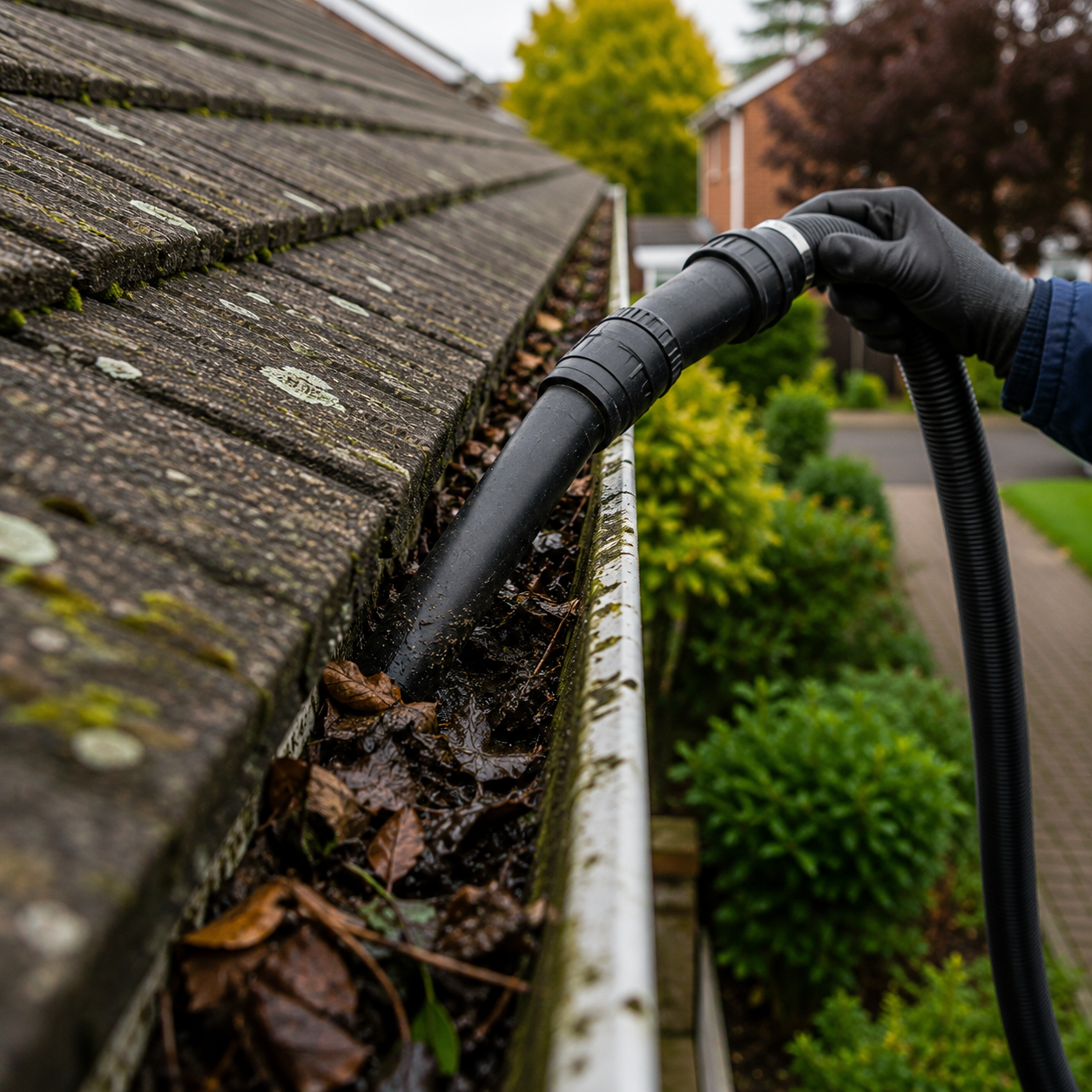
The biggest problem I see is blocked gutters. Every heavy shower washes clumps of moss off the roof and straight into the gutters. That’s when they overflow. If you’re finding moss in the gutters, water spilling over the edge or green clumps landing on your driveway, it’s time to deal with it. A proper gutter clean straight after the roof stops the problem moving downstairs.
Quick tip: stand across the road with your phone camera zoomed in. You’ll get a far better look at the roof than from your own front garden, and the photo is exactly what I need for a price.
Can you pressure wash moss off a roof?
I wouldn’t. I know it looks quick, but blasting a roof forces water up under the tiles. It strips the surface of the tile and can break older ones. It also shortens the life of the roof. That’s a lot of risk for a job that can be done gently.
Please don’t go up a ladder to scrape it off yourself either, unless you’re trained and properly kitted out. Roofs are one of the most common places people get hurt doing jobs at home. No amount of moss is worth that.
What is the safe way to remove roof moss?
A soft approach. The moss is taken off gently rather than blasted. Then the roof gets a treatment that kills the moss, algae and spores at the root. After that a biocide goes on and soaks into the tiles. It keeps working for months and slows the next lot of growth right down. You can read more about the process on my roof cleaning page.
Everything that comes down ends up in the gutters, so they get cleared at the end. It’s often worth having the fascias done on the same visit since they usually carry the same green streaks. I post before and after photos of roofs on my Facebook page if you want to see what a difference it makes.
When is the best time to treat moss on a roof?
Autumn or early winter. That’s before the frosts get to work on wet tiles. It also means the gutters are clear going into the wettest months. At the very least, keep your gutters clear so the moss washing off has somewhere to go. My guide to gutter cleaning before winter explains why that matters.
I cover homes right across Liverpool, Wirral and Sefton, including Southport. That’s everywhere from Woolton to Heswall and Formby. Big trees and old roofs mean I’m up that way a lot.
FAQs
It depends on the roof, so I don’t work from a set price list. The size of the roof, how steep it is, the type of tile and how thick the moss has got all change the amount of work. A small bungalow with light moss is a very different job to a big semi under oak trees. The easiest way to find out is to send me a couple of photos of the roof on WhatsApp to 07469 539 068. I’ll come back with a proper price, usually within about five minutes. You also get 10% off for quoting that way, because it saves me a drive out to look. If you’d rather talk it through, ring me on 0151 272 3404.
Yes, in most cases a photo is all I need. Take it from across the road or from the end of the garden so I can see the whole slope. Zoom in a bit if the phone allows it. A shot of the front and one of the back is ideal, since the back is usually where the worst of the moss is. If there’s anything awkward, like a conservatory or an extension under the roof, mention it in the message. I normally reply within about five minutes. If I can’t tell enough from the photos I’ll say so straight away rather than guess, and I’ll come out to have a look in person.
It depends on the size of the roof and how thick the moss is. A small roof with light growth is a much quicker job than a big house with thick moss on every slope. The time goes on taking the moss off gently, putting the treatment on and then clearing everything out of the gutters at the end. I’d rather take my time on a roof than rush it, because rushing is how tiles get damaged. When I give you a price I’ll also tell you roughly how long I expect to be there. That way you know what to expect before I turn up.
It’ll look a lot cleaner, but I won’t pretend an old roof will look brand new. Removing the moss and treating the tiles takes away the green and most of the dark staining. The difference is usually huge, especially on the north facing side. Some tiles will have faded over the years though, and no clean brings back the original colour of a tile that’s been in the sun for decades. The biocide keeps working after I leave. That means the roof often looks better a few weeks later than it does on the day, as any leftover growth dies off and gets washed away by the rain.
It can if it’s done the wrong way, which is exactly why I don’t blast roofs with a pressure washer. High pressure on tiles can force water underneath, strip the surface and crack older tiles. Taking the moss off gently and letting the treatment do the hard work avoids that. If I spot a cracked or slipped tile while I’m working, I’ll tell you and send you a photo. I won’t pretend to be a roofer, but you’ll know about it before it lets water in. On a roof that’s in really poor shape I’ll say so honestly before starting.
Yes, when it’s used properly. I match the strength of the treatment to the job and I’m careful about where the run-off goes. Before I start I’ll check for things like ponds, vegetable beds or plants right under the gutter line. I’ll also ask you to keep pets inside while I’m working and for a short while afterwards. If there’s anything you’re worried about near the house, mention it when you send the photos and I’ll plan around it. Most people never notice any effect on the garden at all. The bigger risk to plants is usually the clumps of wet moss that fall into borders when it’s left on the roof.
It depends heavily on where you live and how shaded the roof is. The biocide I put on soaks into the tiles and slows new growth for months after the clean. A roof that gets decent sun can stay clear for a long time. One under big trees or facing north will start to show green sooner, because the conditions that caused it in the first place haven’t gone anywhere. Keeping the gutters clear and cutting back branches that overhang the roof both help. If yours is a shady one, a top-up treatment every so often is cheaper than waiting for it to get thick again.
Not after I’ve been, because clearing the gutters is part of the job. Moss that comes off the roof during the clean drops into the gutters, so I clear them out once the roof is done. I use a gutter vacuum with a 15 metre reach, which means it’s all done from the ground. The bigger worry is moss you leave on the roof. Every heavy shower washes more of it down, and that’s one of the main reasons gutters overflow in winter. If your gutters are already full of green clumps, it’s a fair sign the roof needs looking at too, and doing both on one visit makes the most sense.
Honestly, if it’s just a light dusting of green, you can usually leave it for now. Thin patches aren’t doing much harm and I’d rather tell you to save your money than sell you a job you don’t need. The time to act is when it starts building up into thick cushions, when you see clumps landing on the ground or when the gutters keep filling up. Those are signs it’s holding water against the tiles. Keep an eye on it each autumn. Take a photo from across the road and compare it year to year. If you’re not sure, send me the photo and I’ll give you a straight answer.
A dry spell is best, and I avoid frosty mornings. The treatment needs a bit of time to soak into the tiles without being washed straight off, so I keep an eye on the forecast before booking roofs in. Light drizzle later in the day isn’t a disaster, but a downpour straight after isn’t ideal. I also won’t work on a roof in strong wind. Autumn and early winter still have plenty of suitable days around Liverpool, Wirral and Sefton, including Southport. If the weather turns on the day, I’ll ring you and move the job rather than do it badly. A few days’ wait is better than wasting your money.
Is your roof turning green?
If your roof’s going green or your gutters keep filling with moss, send me a couple of photos on WhatsApp. I normally reply within about five minutes and you get 10% off for quoting that way.
See my latest jobs on Facebook, read what customers say on Google, or watch the work on YouTube.